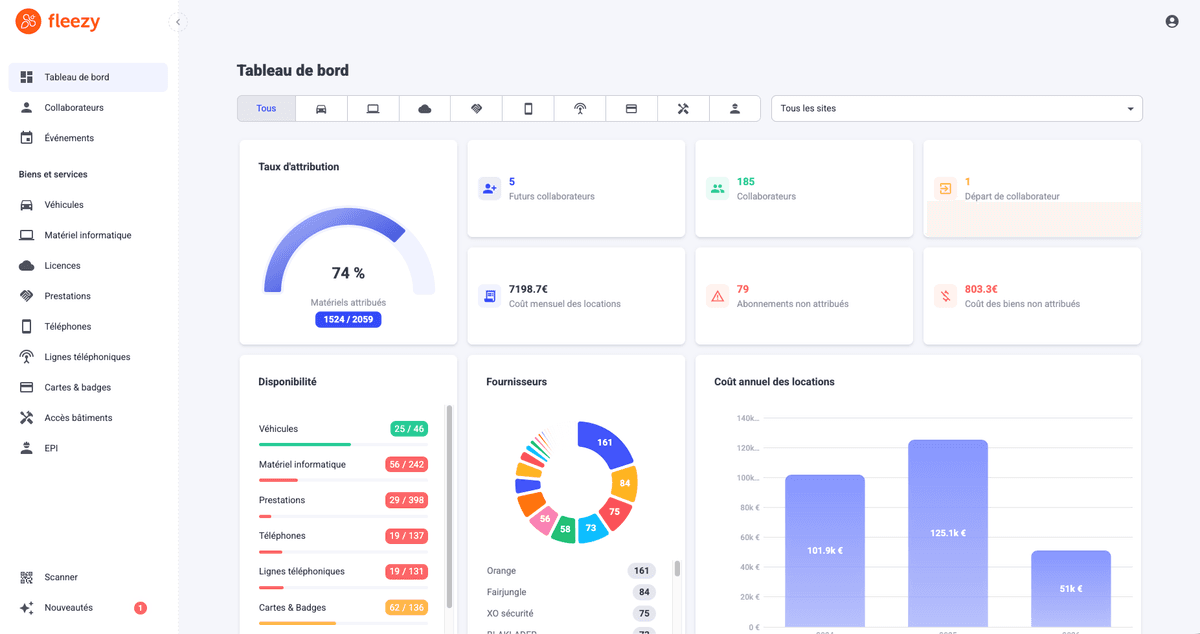
In the construction industry, effective management of equipment and tools is crucial to ensure projects and job sites run smoothly while optimizing costs and resources. That's where construction software comes in. It not only allows you to track equipment usage, but also optimizes its allocation to employees and teams, ensuring smooth, error-free management.
What is construction software?
Construction software is an IT solution dedicated to building and civil engineering companies. It centralizes and tracks all the equipment, materials, and tools needed for your projects. With this kind of software, you can manage maintenance, repairs, and even the allocation of equipment used on each job site.
Real-time tracking of equipment and tools
Simplified equipment management
The main advantage of equipment management software is the ability to track the condition of your equipment in real time. With this kind of tool, you can schedule regular maintenance, track repairs carried out, and receive alerts about potential breakdowns. This tracking reduces the risk of machine downtime and ensures availability during operations.
Optimizing equipment lifecycles
Managing the lifespan of equipment is another crucial aspect of the construction industry. Specialized software helps track the age of equipment and its maintenance cycles, and helps determine the best time to replace or resell it, contributing to long-term cost optimization.
Optimal allocation of equipment to employees
Managing resources efficiently
L’un des principaux défis de la gestion des équipements dans le BTP est de garantir que chaque matériel soit attribué à la bonne équipe ou au bon chantier. Un logiciel de gestion permet de suivre l’affectation du matériel en temps réel et de s’assurer que les équipes disposent des bons équipements au moment où elles en ont besoin.
Reducing duplicates and maximizing equipment use
With management software, it's possible to avoid duplicate purchases and better coordinate equipment use across different projects. This helps maximize equipment utilization and avoid unnecessary purchases, reducing resource management costs.
Centralizing documents related to equipment and employees
Archiving and managing essential documents
Another key benefit of equipment fleet management software is the ability to integrate documents such as quotes and invoices directly into the software. Each piece of equipment has its own profile where these documents can be archived, allowing for centralized management of information related to the equipment. This feature ensures that all supporting documents are available in one place, making it easier to track purchases and maintain traceability.
Construction software: simplifying warranty and contract management
By adding information such as warranties or maintenance contracts directly into the software, managers can easily check the status of each piece of equipment and anticipate the actions needed before a contract or warranty expires.
Improving prevention and employee safety
Construction software is an essential tool for strengthening occupational risk prevention on job sites. It offers features for tracking employee certifications and training, ensuring that only qualified employees can use specific equipment or access sensitive areas. This is all the more important in the construction industry, where the use of temporary workers is common. These temporary workers require enhanced training to ensure their safety and their ability to adapt to the specifics of the job site.
Thanks to its built-in alert systems, the software provides notifications about technical inspections to be carried out and flags any non-compliance issues, reducing the risk of accidents caused by faulty machinery. In the event of an incident, it also makes it easier to record and track corrective actions, contributing to continuous improvement in safety practices.
Reducing equipment-related costs
Optimizing purchases and equipment rental
Equipment management software helps better anticipate material needs for upcoming projects. By centralizing all information related to equipment and consumables, it becomes possible to avoid unnecessary purchases or duplicate equipment. This allows for better stock management, optimized purchasing, and reduced costs associated with acquiring new equipment.
Improving operational efficiency
Optimized management of material resources not only reduces purchasing costs but also improves overall operational efficiency. Less time is spent searching for equipment or dealing with issues caused by unexpected breakdowns, resulting in better productivity on the job site.
Inventory and consumables management
Tracking consumables and construction materials with dedicated software
Beyond managing heavy equipment, equipment management software also helps manage stocks of consumables (tools, spare parts, etc.). This helps avoid stock shortages on job sites and ensures teams have everything they need to carry out their tasks.
Preventing waste and losses
By precisely tracking stock and using inventory management tools, it becomes possible to better control the flow of materials and avoid waste or losses. This helps optimize resource use and maximize the return on investment of equipment.
Real-time access and easier collaboration
Remote management with construction software
More and more equipment management software is available as SaaS (fully web-based), enabling remote access to equipment-related information. This makes collaboration easier between teams on job sites and in the office, allowing for smoother, more responsive management of material resources.
Improved coordination between teams
Thanks to a centralized interface, site managers, equipment managers, and teams can work together more efficiently. Information is updated in real time, reducing the risk of confusion or human error.
Conclusion: effectively managing your equipment with construction software
Using equipment management software for the construction industry simplifies and optimizes many aspects of equipment management. From maintenance to purchase optimization, document centralization, and stock tracking, the benefits are numerous. By improving traceability, compliance, and operational efficiency, this kind of software helps reduce costs and increase productivity for teams in the field.
Investing in equipment management software suited to the needs of the construction industry is therefore essential for any company looking to modernize its equipment management and ensure the success of its projects and job sites.