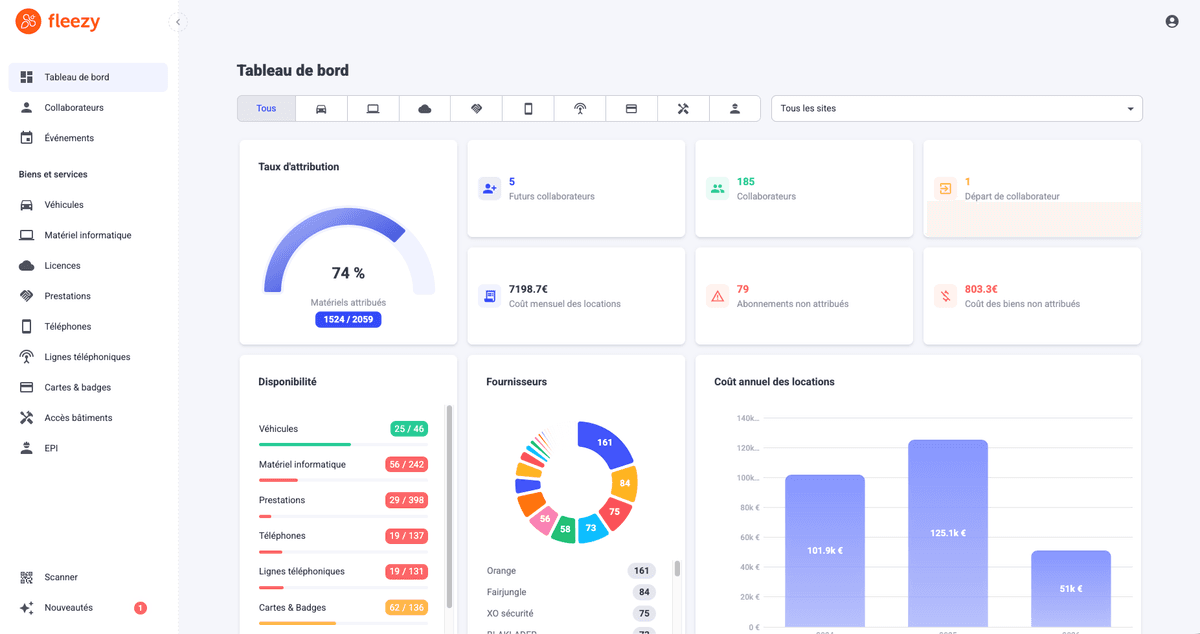
Effective management of a company's equipment fleet is essential for optimizing resources and ensuring smooth operations. When it comes to choosing a tool for this task, Excel and dedicated equipment fleet management software are two common options. You might be wondering: can you manage an equipment fleet with Excel? Is it really more advantageous to use dedicated software? That's what we'll explore in this article. We'll look at the pros and cons of each solution to help you make an informed decision.
Managing your equipment fleet with Excel: advantages and limitations
The advantages of Excel for equipment fleet management
- Ease of use: Excel is commonly used by businesses, and many people are already familiar with its interface, making it easy to adopt.
- Flexibility and customization: this tool allows you to easily customize spreadsheets to meet your company's specific needs.
- Affordable cost: Excel is usually included in the Microsoft Office suite or can be purchased at a relatively low cost, making it an economical option.
The limitations of Excel for equipment fleet management
- Data volume limitations: Excel struggles to efficiently handle large amounts of data, which can lead to performance and stability issues.
- Functional and reporting restrictions: while Excel can handle data, it isn't designed for equipment fleet management. It doesn't offer all the specific features you need to effectively manage your equipment. You'll need to create custom spreadsheets for every aspect of your management, which can be tedious and complex.
- Risk of errors: since data is often entered manually in this software, there's a higher risk of input errors or incorrect formulas, which can affect the accuracy of your information.
- Difficulty tracking changes: tracking changes and updates in Excel can be complex, especially if multiple users are working on the files and spreadsheets at the same time.
As we can see, Excel has its limitations when it comes to managing equipment. So what about dedicated software, and how can you effectively manage your equipment fleet?
Equipping yourself with equipment fleet management software: benefits and cost
The benefits of equipment fleet management software
- Handling large volumes of data: equipment fleet management software is designed to handle large amounts of data, greatly simplifying this task.
- Data analysis: equipment fleet management solutions offer advanced data analysis tools to help you identify trends, issues, and opportunities for improvement. You can easily generate custom reports and real-time analytics.
- Task automation: they also offer advanced features such as automatic report generation and preventive maintenance scheduling, allowing you to automate certain tedious tasks.
- Detailed tracking and history: this kind of software lets you keep a detailed history of your equipment, including information on purchases, transfers, repairs, and so on.
- Specialized features: equipment fleet management software is designed to handle all the key functions of fleet management, such as managing rental contracts, scheduling maintenance, managing costs, and so on.
- Accessibility: this type of tool also allows multiple users to work simultaneously and in real time on the same data. It can also be accessed remotely from any device, allowing for greater flexibility and better collaboration.
The cost of equipment fleet management software
Equipment fleet management software can represent a larger financial investment compared to Excel. Costs can include software licenses, maintenance and support fees, as well as any updates.
That said, equipping yourself with equipment fleet management software can lead to savings on several levels. As a result, the investment in a fleet management solution can pay for itself quickly. For example, software allows you to:
- Precisely track stock levels and identify surplus or short-supply equipment. This allows you to adjust orders accordingly, avoid unnecessary purchases, and reduce costs related to overstocking or stockouts.
- Reduce losses and theft. With precise equipment tracking through the software, you can reduce losses and theft. This saves on replacing lost or stolen equipment, as well as on associated indirect costs, such as equipment being unavailable for business operations.
Overseeing preventive maintenance, tracking contracts and warranties, and analyzing expenses are all advantages of using software to optimize your costs.
It's important to note that the savings achieved will depend on how effectively the software is implemented and the quality of the company's internal management processes. Proper use of the software and regular data maintenance are essential to maximizing the financial benefits of equipment fleet management.
So which solution should you choose for your company? Both Excel and equipment fleet management software have distinct advantages and disadvantages. If your company has a limited equipment fleet and you're looking for an affordable, flexible solution, Excel may be a good option. However, if your company has a substantial equipment fleet and needs advanced automated management features, dedicated equipment fleet management software may be may be more appropriate. Assess your specific needs, your specific needs and the capabilities of each solution before making your decision.